

Yes, you can whitewater raft near the Smoky Mountains, and the answer to “where” is almost always the Pigeon River near Hartford, Tennessee. Pick the Upper section for Class III–IV adrenaline, or the Lower section for a Class I–II family float that welcomes kids as young as three on many trips. Combo runs let you do both in one day. Book from spring through early fall, and lock in your spot early for summer weekends and holidays.
TL;DR:
- The Upper Pigeon River offers adrenaline-pumping Class III–IV rapids suitable for thrill-seekers aged around 8 and older, with about 1 to 2 hours of on-water paddling.
- The Lower Pigeon River provides a calmer, scenic experience for families with young children as young as 3, with rapids mostly in Class I–II and a paddling duration of roughly one hour.
- Booking early for peak summer weekends and holidays is crucial, especially for the Upper section, with dam-controlled releases influencing trip timing and water flow.
- Private raft bookings cost more but allow groups to avoid mixed groups, and booking at least a few weeks in advance ensures availability during busy seasons.
- Reputable outfitters emphasize guide instruction and dam release schedules as the main safety factors, with weather rarely shutting down trips unless severe.
Table of Contents
- What Should You Check Before Booking a Pigeon River Trip?
- Upper, Lower, or Combo: Which Pigeon River Trip Fits Your Group?
- When Should You Book Your Pigeon River Rafting Trip?
- What to Pack and Expect on Rafting Day
- How Do Guides and Dam Releases Keep the River Safe?
- What Happens If You Need to Cancel Your Trip?
- Making Rafting Fit Into a Bigger Smokies Trip
- Make Your Rafting Day Easier With the Right Home Base
- Where to Check Current Schedules and Requirements
- Sources
- FAQ
What Should You Check Before Booking a Pigeon River Trip?
Before you hand over a deposit, run the trip through a short mental checklist. The river section matters more than the outfitter’s name on the van, since Upper and Lower Pigeon are genuinely different experiences with different risk profiles and different appeal.
Here’s how the two main sections stack up on the factors that actually change your day:
| Factor | Upper Pigeon River | Lower Pigeon River |
|---|---|---|
| River section | Upper gorge run | Lower/scenic run |
| Difficulty (class rating) | Class III–IV | Class I–II |
| Best for | Thrill-seekers, teens, adults | Young kids, families, first-timers |
| Minimum age/weight | Around 8 years old / 70 lbs | As young as 3 on many trips |
| Typical on-water duration | About 1 to 2 hours on the water | Roughly 1 hour, calmer pace |
| Approx. drive from Gatlinburg/Pigeon Forge | Approximately a 45 to 60 minute drive | 45 to 60 minutes |
Once you know which section fits your group, a handful of questions separate a well-run trip from a frustrating one:
- Ask whether the outfitter runs guaranteed release days or depends on natural flow.
- Ask if private raft bookings are available if you don’t want to share a boat with strangers.
- Ask what photo packages cost and whether they’re included or an add-on.
- Ask about the cancellation and weather policy before you pay a deposit.
- Ask how early you need to arrive relative to your launch time.
Pricing usually runs per person for standard group trips, with a premium option to book a private raft for just your party. That second option costs more but skips the awkward mixed-group dynamic entirely, which matters if you’ve got nervous first-timers or a tight-knit family that wants the boat to itself.
Upper, Lower, or Combo: Which Pigeon River Trip Fits Your Group?
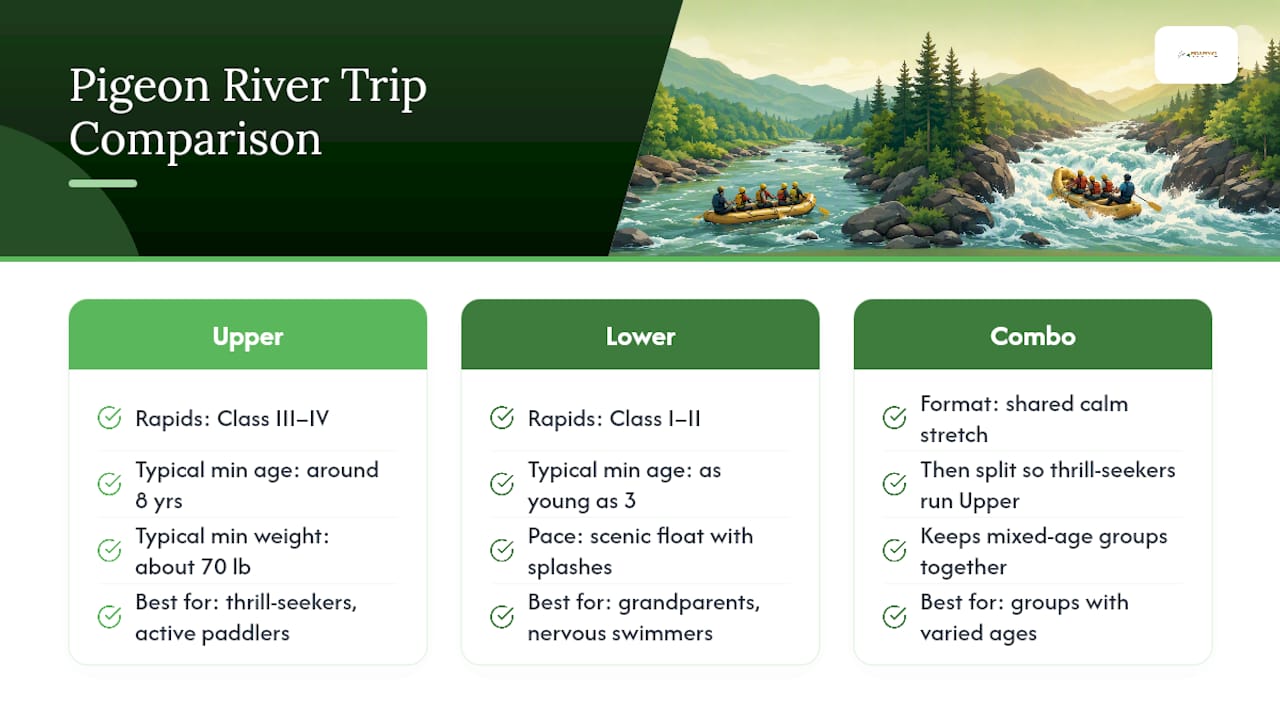
The Upper Pigeon River delivers the fast, technical water most people picture when they hear “whitewater rafting Smoky Mountains.” It’s a string of energetic Class III–IV drops that reward paddling with your guide’s commands, and it’s the section thrill-seekers ask for by name. Most operators set the minimum age generally around 8 years and minimum weight about 70 pounds, which rules it out for toddlers but opens the door to almost any older kid or adult in reasonable shape.
The Lower Pigeon River is a different animal entirely. Rapids top out around Class I–II, the pace is closer to a scenic float with a few splashy bursts, and many outfitters accept children as young as 3. If you’ve got grandparents, nervous swimmers, or a stroller-age kid in the group, this is the section built for you.
Combo or full-day packages exist for exactly the situation where your group can’t agree on one or the other. You run the calmer stretch together, then split so the thrill-seekers hit the Upper section while the rest of the group relaxes or grabs lunch. It’s the most efficient way to keep a mixed-age group happy without anyone sitting out the whole day.
When Should You Book Your Pigeon River Rafting Trip?
Timing on the Pigeon River comes down to two things: the calendar and the release schedule. Here’s how to plan around both.
- Book within the season. Pigeon River rafting typically runs from March or April through September or October, with the warmest, busiest window falling in June, July, and August.
- Understand release days. The river sits below Walters Dam, so many trips run on scheduled, dam-controlled releases rather than pure rainfall. That makes runnable days predictable, but the size of a given release still changes how pushy the rapids feel that day.
- Reserve ahead for peak dates. Summer weekends and holiday stretches fill fast, especially for Upper Pigeon slots, so book at least a few weeks out if your trip lands in July or around a holiday weekend.
- Go weekday mornings for smaller crowds. If flexibility is on your side, a Tuesday morning trip in May or September gets you a much quieter river than a Saturday in July.
What to Pack and Expect on Rafting Day
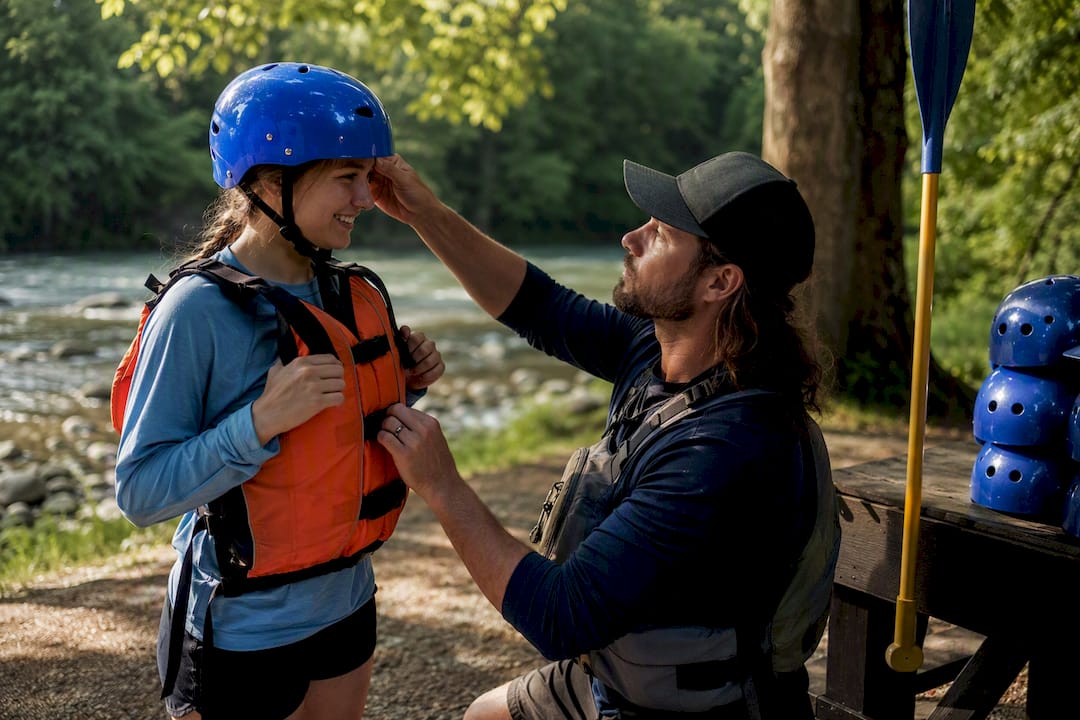
Plan to arrive at least 30 minutes before your scheduled launch. That window covers check-in, a mandatory safety briefing, and getting fitted for a life jacket and helmet, and most outfitters shuttle guests a short distance by bus to the actual put-in point.
Budget 2 to 3 hours total for the experience door to door, even though actual paddling time on the water usually runs 1 to 1.5 hours depending on which section you booked. The rest is briefing, shuttle, and gearing up.
A few packing notes that save you a headache at the outpost:
- Wear secure water shoes or strapped sandals. Flip-flops are commonly banned because they come off in rapids.
- Leave real valuables in the car, or rent a locker on-site for a small cash fee.
- Bring a waterproof phone case if you want photos yourself, since most operators also sell professional photo packages shot from the riverbank.
- Pack quick-dry clothes, sunscreen, a towel, and a full change of clothes for the ride home.
Pro Tip: Stash your dry change of clothes in a gallon zip bag inside your car, not your daypack. Wet gear soaks through regular bags fast, and nobody wants to dig through a soggy backpack in a parking lot.
How Do Guides and Dam Releases Keep the River Safe?
The single biggest factor in a safe, good trip isn’t the water level or the raft model. It’s whether you actually listen during the pre-trip safety briefing and follow your guide’s commands once you’re on the water. Outfitters consistently point to guide instruction, not gear, as the variable that determines whether a trip goes smoothly.
Reputable operators staff trained, certified guides, and it’s fair to ask about a guide’s experience level when you book if that matters to you. The dam-controlled releases add another layer of predictability: because Walters Dam regulates flow, outfitters can schedule guaranteed-run days rather than gambling on rainfall. The tradeoff is that release size still swings how aggressive the rapids feel, so the same stretch of river can paddle noticeably differently from one release day to the next. First-timers do best on the Lower run or a guided Upper trip designed specifically to onboard beginners.
What Happens If You Need to Cancel Your Trip?
Cancellation policies vary by outfitter, but a few patterns hold across most Pigeon River operators. Full refunds or free rescheduling are common if you cancel several days ahead of your launch date, while last-minute cancellations, especially inside 24 to 48 hours, often forfeit part or all of a deposit.
Weather is where policies diverge most. Because the river is dam-controlled, light rain rarely shuts down a trip, and most outfitters run rain or shine. Severe weather, dangerously high water, or a scheduled release that gets canceled upstream is a different story. In those cases, most operators offer a reschedule to another date rather than a straight cash refund, though some will refund in full if they cancel the trip on their end.
Group bookings and private raft reservations sometimes carry stricter terms, since the outfitter has blocked that raft or guide specifically for you. Always ask for the written cancellation policy before you pay a deposit, not after. A quick email confirming the refund window, weather policy, and reschedule fees (if any) takes five minutes and saves an argument later. If you’re booking around a specific date, like a family reunion week or a single vacation day carved out of a longer Smokies trip, treat that policy as seriously as the trip difficulty rating itself.
Making Rafting Fit Into a Bigger Smokies Trip
Book your raft trip as a half-day, morning or afternoon, and build the rest of the day around it. Staying near Hartford, Pigeon Forge, or Gatlinburg cuts your transfer time and keeps a rafting morning from eating your whole vacation day. For mixed-age groups, plan a break with snacks and sunscreen between the shuttle and the put-in, and pack an extra dry set of clothes so nobody’s stuck cold in the car. A hot tub back at your rental afterward does more for sore paddling arms than you’d expect.
— Joe
Make Your Rafting Day Easier With the Right Home Base
A short drive turns a good rafting day into a great one, and that starts with where you sleep the night before. You can connect directly with property owners to avoid agency markups or hidden fees on your lodging.

Beyond price, a cabin near Hartford, Pigeon Forge, or Gatlinburg solves the small logistics that actually ruin a rafting morning: nowhere to hang wet gear, no kitchen for a fast breakfast before check-in, no space for a group that split between the Upper thrill run and the Lower float. Browse cabin, chalet, and condo rentals sorted by proximity to the outposts, or search the full vacation homes listings if you’re traveling with a larger group that needs multiple bedrooms and a hot tub for the sore-muscle recovery afterward. Peak rafting season overlaps with peak cabin demand, so search your dates and book directly with the owner before summer weekends fill up.
Where to Check Current Schedules and Requirements
For the most current release schedules, age and weight minimums, and locker or photo package details, go straight to the outfitters and regional guides:
- Big Creek Expeditions for Pigeon River trip specifics and booking.
- Tennessee Vacation’s rafting guide for regional trip planning and safety tips.
- Smoky Mountain River Rat for gear, footwear, and locker fee details.
Confirm minimum age and weight requirements directly with your chosen operator before arrival, since these vary slightly by trip and season.
Sources
- White Water Rafting on The Pigeon River Tennessee | Big Creek Expeditions
- Rafting the Upper Pigeon River | Big Creek Expeditions
- Pigeon River Whitewater Rafting | Big Creek Expeditions
- Tennessee rafting trip inspiration | Tennessee Vacation

About the Author
Joe Godar of the Smoky Mountains By Owners (SMBYO) Editorial Team creates destination guides, vacation-planning resources, and local travel content focused on Smoky Mountains vacation rentals.
Our team researches Smoky Mountains communities, vacation rental trends, family travel planning, local attractions, outdoor activities, and direct-booking best practices. Every guide is written to help travelers make more informed booking decisions while avoiding unnecessary third-party guest service fees.
Smoky Mountains By Owners (SMBYO) helps travelers research the Smoky Mountains and connect directly with vacation rental owners and professional property managers.
This article was reviewed for accuracy and updated using local destination research and current vacation rental market insights.