
Snow is possible in Gatlinburg from November through early April, with the best odds landing in January and February. Downtown mostly sees light dustings that melt fast, so the real snow is up high, at Newfound Gap, Clingmans Dome, and Ober Mountain. Before you drive down expecting a winter wonderland, check the live park and resort reports first.
TL;DR:
- Snow in Gatlinburg is most consistent and likely to accumulate at higher elevations such as Clingmans Dome, Newfound Gap, and Ober Mountain, especially in January and February.
- Downtown Gatlinburg rarely sees lasting snow, often just light dustings that melt quickly, while higher elevations can have snowfalls of a foot or more during strong winter storms.
- Weather conditions can change rapidly, so checking live reports from Ober Mountain, park alerts, and snow trackers on the morning of your trip is essential before heading into the mountains.
- Planning your lodging close to higher-elevation areas and confirming snow access and road conditions upfront greatly reduces the risk of disappointment.
- Expect low-elevation snowfall to be light and sporadic, with the most snowfall and consistent snow cover occurring on mountaintops during peak winter months.
Table of Contents
- When Is Snowfall Possible in Gatlinburg?
- Where to See Snow Near Gatlinburg
- How Much Snow Does Gatlinburg Actually Get?
- How to Check Snow Conditions Before You Drive
- Planning Your Trip Around Gatlinburg Winter Weather
- What I’d Prioritize If You’re Chasing Snow
- Find Winter-Ready Cabins Near the Snow
- Sources
- FAQ
When Is Snowfall Possible in Gatlinburg?
Snow season in Gatlinburg runs November through early April, but it doesn’t fall evenly across those five months, similar to how the best time of year to go to Phuket depends on seasonal patterns. According to the National Park Service, January and February carry the highest odds of measurable snowfall, while November, March, and early April tend to bring only occasional light events.
Elevation drives almost everything here. Temperature drops roughly 3 to 5 degrees for every 1,000 feet you climb, a phenomenon meteorologists call the lapse rate. That’s why you can leave a 45 degree afternoon in downtown Gatlinburg and hit snow-covered pavement 20 minutes later at Newfound Gap, which sits over 5,000 feet higher than the valley floor.
A few things to keep in mind about the seasonal pattern:
- Snow can technically fall as early as late October in a cold year, though it’s uncommon before mid-November.
- January and February produce the most consistent snow events, including multi-day cold stretches.
- March often brings a late-season surprise storm, then warms quickly.
- Early April snow is rare but not unheard of at the highest elevations.
Gatlinburg weather by month swings widely even within winter itself. A warm January thaw can wipe out snowpack in days, only for a February cold front to bring it right back.
Where to See Snow Near Gatlinburg
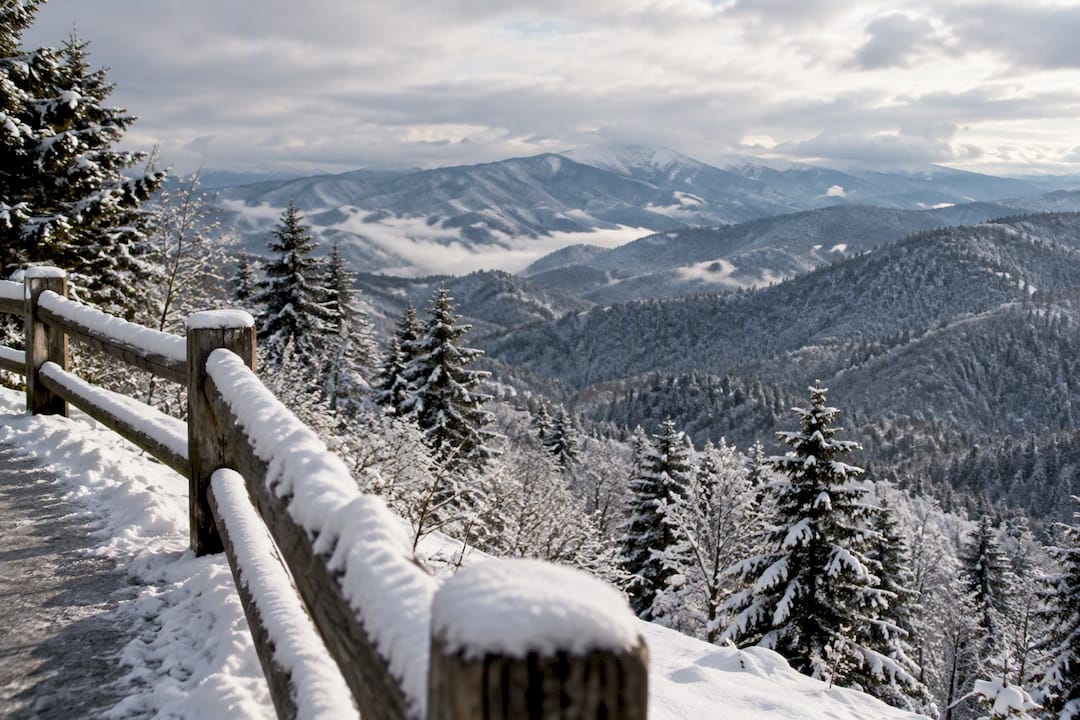
Where you look matters more than when you go. Downtown Gatlinburg gets snow, but it rarely sticks. Most winters bring a handful of light dustings that dress up the holiday lights for a day or two before melting. If you want snow you can count on, you need altitude or man-made help.
Here’s how the main spots compare:
- Downtown Gatlinburg: Charming when it happens, but light accumulation and short-lived cover most years, according to Gatlinburg’s own weather guidance.
- Ober Mountain: Runs man-made snow alongside natural snowfall, making it the one local spot where a snow experience is close to guaranteed once the resort opens for the season. Check the Ober Mountain slope report before heading up.
- Newfound Gap: Sitting at 5,046 feet on the Tennessee/North Carolina line, this overlook inside the Great Smoky Mountains National Park routinely holds snow when the valley has none.
- Clingmans Dome (Kuwohi): The highest point in the park at 6,643 feet, and typically the snowiest spot anywhere near Gatlinburg during a real winter storm.
Parking at Newfound Gap fills fast on snow days, and the road up can close on short notice during ice events. Ober Mountain has its own lot and is the easier, lower-effort option if you just want guaranteed snow without gambling on park road status.
How Much Snow Does Gatlinburg Actually Get?
Set your expectations around the town, not the mountaintops. NOAA/NCEI climate normals put Gatlinburg’s low-elevation snowfall in the light category most winters, with the Gatlinburg station’s monthly normals showing modest averages across the coldest months.
| Month | Typical snowfall pattern (low elevation) |
|---|---|
| November | Rare, usually a trace |
| December | Occasional light snow |
| January | Peak month, light to moderate |
| February | Peak month, light to moderate |
| March | Occasional late-season snow |
Higher up, the story changes fast. NPS climate tables for the park’s upper elevations show that a single strong storm can drop a foot or more at Clingmans Dome or Newfound Gap while Gatlinburg itself gets rain or a light dusting. Pack for a light-snow town and a genuinely wintry mountaintop, because you’ll likely see both in the same day.
How to Check Snow Conditions Before You Drive
Checking three or four sources the morning of your trip beats guessing based on a forecast from days earlier.
- Ober Mountain slope report. Shows lift status, grooming, and current snow depth on the resort’s official slope report.
- NPS alerts and park pages. Covers Newfound Gap Road closures, chain requirements, and higher-elevation advisories straight from the park itself.
- AccuWeather’s Gatlinburg forecast. Useful for short-term winter weather outlooks and whether a system is actively moving through.
- Live snow-total trackers. Sites tracking Gatlinburg’s ZIP 37738 accumulation give you actual measured inches after a storm, not just a forecast guess.
Cross-check at least two of these before committing to a mountain drive. Trackers vary station to station, and a single reading can be off by an inch or two.
Planning Your Trip Around Gatlinburg Winter Weather
Getting caught unprepared on a mountain road is the single most common mistake winter visitors make here. A little planning removes most of the risk.
- Check road status before leaving your lodging, not the night before. Conditions on Newfound Gap Road can change within hours.
- Bring tire chains or drive a 4WD vehicle if you plan to reach higher elevations during an active system.
- Pack waterproof boots, real layers, a flashlight, and a backup heat source in case of a power outage.
- Confirm your cabin’s driveway is cleared or clearable, and ask about backup heat before booking if you’re staying somewhere remote.
- Watch for ice on sidewalks and steps around downtown Gatlinburg even when the roads look clear.
Pro Tip: Check the Smokies Road Info feed the morning of travel, not just the forecast. Road status can flip from open to closed in under an hour when temperatures drop below freezing after a wet day.
What I’d Prioritize If You’re Chasing Snow
If seeing real snow is the whole point of your trip, don’t build your plans around downtown Gatlinburg. Head for Newfound Gap, Clingmans Dome, or Ober Mountain, and book lodging that’s actually set up for winter access. Check the live reports the morning you leave, not three days out. That single habit prevents more disappointment than any amount of forecast-reading in advance.
— Joe
Find Winter-Ready Cabins Near the Snow
Booking a cabin with real winter access matters more than most people realize when a cold front rolls through. There are regional marketplaces connecting travelers directly with property owners across the Smoky Mountains, cutting out the markup and guesswork of booking through a middleman. That means you can ask the owner directly whether the driveway gets plowed, whether there’s a backup heat source, and how close the property actually sits to Ober Mountain or Newfound Gap Road.

Owners list cabins, chalets, and condos with details on hot tubs, mountain views, and proximity to the park, so you can match your lodging to how close you want to be to the snow. If you’d rather browse full inventory by amenity and location, the vacation rental search lets you filter for exactly that. Property owners looking to list their own place for the winter season can do so through the yearly listing plan for $349 per year. Either way, confirm winter access details with the owner directly before you book, and pick a cabin that puts you close enough to chase the snow when it actually shows up.
Sources
- Weather - Great Smoky Mountains National Park (U.S. National Park Service)
- NOAA / NCEI normals monthly data (Gatlinburg station)
- Ober Mountain slope report
- Gatlinburg weather | Year-round climate & travel advice
- Gatlinburg, TN (37738) Snow Totals & Accumulation - Precip

About the Author
Joe Godar of the Smoky Mountains By Owners (SMBYO) Editorial Team creates destination guides, vacation-planning resources, and local travel content focused on Smoky Mountains vacation rentals.
Our team researches Smoky Mountains communities, vacation rental trends, family travel planning, local attractions, outdoor activities, and direct-booking best practices. Every guide is written to help travelers make more informed booking decisions while avoiding unnecessary third-party guest service fees.
Smoky Mountains By Owners (SMBYO) helps travelers research the Smoky Mountains and connect directly with vacation rental owners and professional property managers.
This article was reviewed for accuracy and updated using local destination research and current vacation rental market insights.