
For central access and evening entertainment, base in Gatlinburg or Pigeon Forge. For quiet mornings and easy trailhead access, choose Townsend or Wears Valley. For a private cabin with a hot tub and mountain view, book a direct rental. And if you want to sleep inside the park itself, LeConte Lodge is the only option, and it requires a multi-mile hike and advance reservations. The sections below break down exactly how to match your trip to the right town, lodging type, and booking window.
TL;DR:
- Most private cabins offer better value and personalization when booked directly through owner platforms, especially for travelers seeking privacy, views, or pet-friendly options.
- Gatlinburg provides the most central access and amenities but tends to be crowded during peak seasons, with limited parking and higher prices on weekends and holidays.
- Quieter towns like Townsend and Wears Valley offer easier trailhead access and fewer crowds, making them ideal for early risers and those valuing tranquility over convenience.
- Inside the park, LeConte Lodge is the only lodging option and requires a multi-mile hike with seasonal availability, so it suits highly adventurous travelers prepared for backcountry conditions.
- Peak booking demands occur during summer weekends, fall foliage, and firefly season, so early reservations through recreation.gov or private owner sites are essential to secure preferred stays.
Table of Contents
- Which Town Fits Your Travel Style?
- What Are the Best Gateway Towns Near the Smoky Mountains?
- What Types of Lodging Are Available Near the Smoky Mountains?
- How Should You Decide Where to Stay?
- When Should You Book Your Smoky Mountains Stay?
- What Are the Best Luxury and One-of-a-Kind Stays?
- How Smokymountainsbyowners Helps You Book Direct
- Do You Need to Plan for Accessibility?
- What Safety and Wildlife Precautions Matter for Your Stay?
- How Do Amenities Compare Across Lodging Types?
- Where to Verify Details and Finish Booking
- A Local’s Honest Take on Where to Stay
- Ready to Book a Private Cabin in the Smokies?
- Sources
- FAQ
Which Town Fits Your Travel Style?
Matching your trip to the right base saves you hours of frustration later. Here’s how the major traveler types tend to sort themselves out.
- Families with kids: Pigeon Forge, with its condos and resort-style cabins near Dollywood and the Parkway’s attractions, tends to work best. Look for properties with pools or game rooms to burn off extra energy after a day of hiking.
- Couples wanting quiet or romance: Townsend or Wears Valley delivers a slower pace, with cabins tucked into hillsides and far fewer crowds than Gatlinburg’s main strip.
- Groups needing space: Large private cabins in Pigeon Forge or Sevierville often sleep multiple people, with multiple bedrooms, game rooms, and hot tubs that a hotel block simply can’t match.
- Budget travelers: Sevierville and Cherokee tend to have lower-cost motels and smaller cabins than the pricier resort corridors closer to the main Gatlinburg entrance.
- Pet owners: Pet-friendly cabins are common across Sevierville, Pigeon Forge, and Townsend, but always confirm the pet policy and any fee before booking. Not every listing allows dogs, and fenced yards are rarer than you’d expect.
Quick note: Gatlinburg offers the most central access and services, while Townsend and Wears Valley trade some convenience for noticeably lighter traffic and earlier trailhead starts.
What Are the Best Gateway Towns Near the Smoky Mountains?
Every gateway town gives you a different relationship with the park, and picking the wrong one is the single most common trip-planning mistake.
Gatlinburg sits right at the park’s main entrance, a few minutes from the Sugarlands Visitor Center. It’s dense with restaurants, shops, and hotels, which makes it the easiest town for evening activities but also the most congested, especially on summer weekends and during fall foliage. Parking downtown can eat 20 minutes you didn’t plan for.
Pigeon Forge is about 10 minutes further from the park entrance than Gatlinburg, and it trades some proximity for space. This is where you’ll find the bulk of large cabins and family resorts, plus Dollywood and the outlet shopping corridor. Traffic on the Parkway rivals Gatlinburg’s during peak season.
Sevierville sits a bit further out again, generally 20 to 25 minutes from the park, and functions as a quieter, more affordable home base with easy access to both Pigeon Forge and the interstate.
Townsend and Wears Valley sit on the park’s quieter side, feeding into the Townsend “Wye” entrance and Cades Cove. Locals often call this the peaceful alternative, and it genuinely earns that reputation: fewer stoplights, less foot traffic, and a shorter drive to sunrise hikes.
Bryson City and Cherokee anchor the North Carolina side and work well for visitors combining a Smokies trip with whitewater rafting or a Blue Ridge Parkway drive. These towns give you access to the park’s western entrances without the crowds you’d hit near Gatlinburg.
Walland and Waynesville sit further from the park boundary but host some of the region’s most distinctive luxury properties, appealing to travelers who want a curated stay over quick trailhead access.
What Types of Lodging Are Available Near the Smoky Mountains?
The lodging landscape here splits into a handful of distinct categories, and each one comes with its own trade-offs worth understanding before you book.
- Front-country campgrounds. These sit inside the park and book through Recreation, the reservation platform most NPS campgrounds use. Popular sites fill fast in peak season, so reserve as early as the booking window allows.
- LeConte Lodge. This is the only lodging inside the park boundaries, and it’s unlike anything else on this list. You reach it by hiking 5 to 8 miles up one of five trails, and it operates seasonally, generally from mid-March through mid-November. Expect no electricity in the cabins, propane heat, and hearty family-style meals, a genuine backcountry experience with a roof over your head.
- Private cabins and short-term rentals. These dominate the gateway towns and give you privacy, a full kitchen, and often a hot tub or mountain view that a hotel room can’t offer. Group sizes and pet policies vary by owner, so check listings carefully.
- Hotels, resorts, and bed-and-breakfasts. These cluster in Gatlinburg and Pigeon Forge, offering daily housekeeping, pools, and walkable access to restaurants, a good fit for travelers who want convenience over space.
- Glamping, treehouses, and domes. These experiential stays are scattered around the region in smaller numbers and tend to book out fast given how limited capacity is.
How Should You Decide Where to Stay?
Run through a short checklist before you commit to a listing, and you’ll avoid most of the regret bookings people post about after the fact.
- How far is the drive to the park entrance you’ll actually use most?
- Is parking included, and is it on-site or a walkaway?
- How much traffic and noise will you tolerate on your commute in and out?
- Do you need a kitchen, hot tub, or pet-friendly listing?
- How many people need to sleep comfortably, and in how many separate rooms?
- Does the property need to accommodate mobility limitations?
When you contact a host directly, ask about parking details, whether the driveway handles a standard sedan or requires four-wheel drive, how the property is heated and cooled, cellphone coverage (spotty in mountain hollows), and the cancellation policy.
Pro Tip: A cabin that’s 25 minutes from the park but half the price of a Gatlinburg condo is often the better deal. You’re trading a slightly longer drive for a quieter, cheaper stay, and most people don’t notice the extra time once they’re there.
The real trade-off almost always comes down to this: a shorter drive buys you convenience, but a quieter location buys you a better night’s sleep and easier trailhead starts.
When Should You Book Your Smoky Mountains Stay?
Peak demand hits during summer weekends and the fall foliage weeks in October, when color-chasers flood every gateway town at once. The synchronous firefly events in early summer create an especially narrow booking window, since demand for nearby lodging spikes the moment dates are announced.
For campgrounds, book through recreation.gov as early as the release window opens. Popular sites like Elkmont and Cades Cove routinely sell out. LeConte Lodge runs its own seasonal reservation system tied to its mid-March through mid-November operating window, and spots for peak months go quickly.
Private rental availability varies by owner, but the same rule applies: book earlier for October and summer weekends. A few practical habits help regardless of lodging type:
- Stay flexible on dates if you can, even by a day or two.
- Consider a midweek stay to dodge both crowds and higher weekend rates.
- Read the cancellation policy before you pay a deposit, especially for peak-season bookings.
What Are the Best Luxury and One-of-a-Kind Stays?
Not every trip to the Smokies calls for a cabin near a trailhead. Some travelers want the mountain views without giving up curated dining, spa access, or a genuinely memorable setting, and the region has a handful of properties built exactly for that.
Blackberry Farm and The Swag) sit on the park’s periphery in the Walland and Waynesville area, and both lean into immersive hospitality rather than proximity to a park entrance. Expect on-site dining, curated outdoor activities, and a pace built around slowing down rather than checking off trailheads.
- Ranch-style and farm retreats built around multi-course dining and guided outdoor experiences.
- Treehouses and glamping domes with private decks and unobstructed mountain views.
- Boutique inns offering personalized service you won’t find at a chain hotel.
These properties reward booking early, particularly around fall foliage, though shoulder-season stretches in late winter or early spring sometimes open up better rates and more availability for the same rooms.
How Smokymountainsbyowners Helps You Book Direct
Smokymountainsbyowners connects you straight to the people who own the cabin, chalet, or condo you’re booking, cutting out the middleman markup that comes with big listing sites. That means better rates and a more personal line of communication if something comes up before your trip.
The platform lists various properties across gateway towns on both the Tennessee and North Carolina sides, with options such as pet-friendly cabins, large-group properties, and cabins with mountain views or hot tubs. When you’re comparing listings, check for clear photos of the actual parking area, a specific pet policy rather than a vague mention, and a host who responds to questions before you book.
Search by town, then filter for your must-have amenities, whether that’s a fenced yard, a game room, or a hot tub with a view.
Do You Need to Plan for Accessibility?
Mobility needs to deserve real planning here, not an afterthought, since terrain and older building stock in mountain towns can catch travelers off guard. Cabins built into hillsides often come with steep driveways, multiple exterior steps, or gravel paths that a standard wheelchair or walker can’t handle comfortably.
When searching for a rental, look specifically for listings that mention single-level living, paved parking, and step-free entry. Not every owner lists this detail clearly, so it’s worth asking directly before booking rather than assuming.
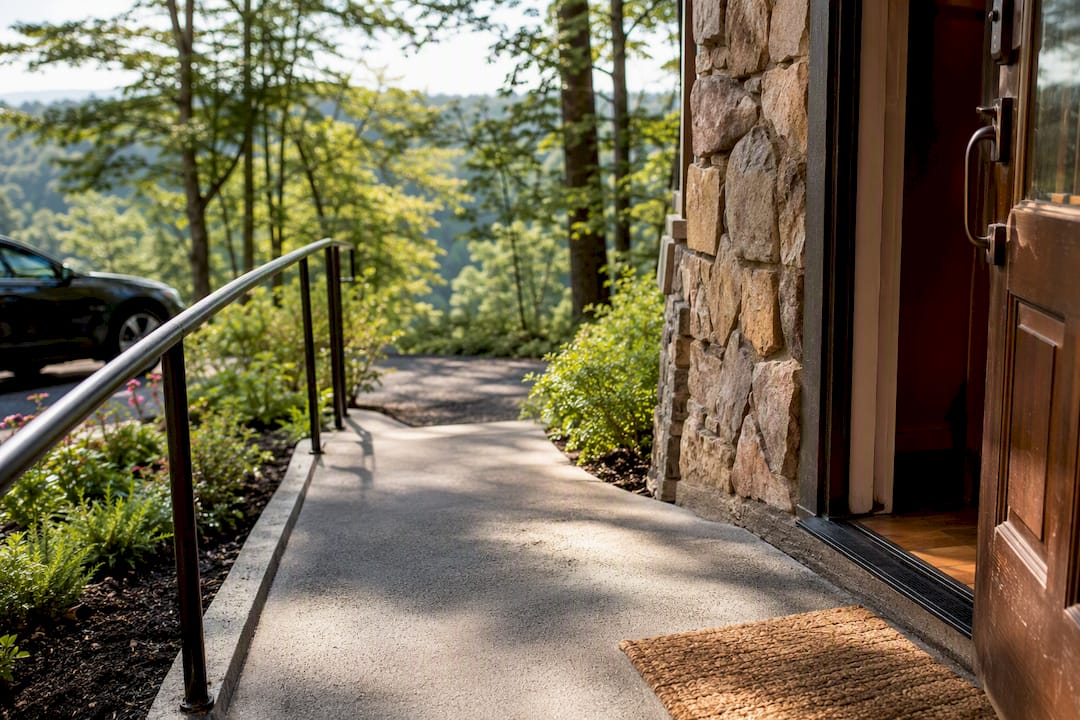
Inside the park, Cades Cove Loop Road and several visitor centers offer paved, accessible paths, but many trailheads and overlooks involve uneven terrain or gravel lots that limit access for wheelchairs and mobility devices. If accessible trails matter to your trip, plan your base around Gatlinburg or Sugarlands, since both sit close to visitor centers with accessible facilities and shorter drives to paved loop roads.
LeConte Lodge, by its nature, is not an option for travelers with mobility limitations. Reaching it requires a 5- to 8-mile hike over rough terrain, regardless of fitness level.
What Safety and Wildlife Precautions Matter for Your Stay?
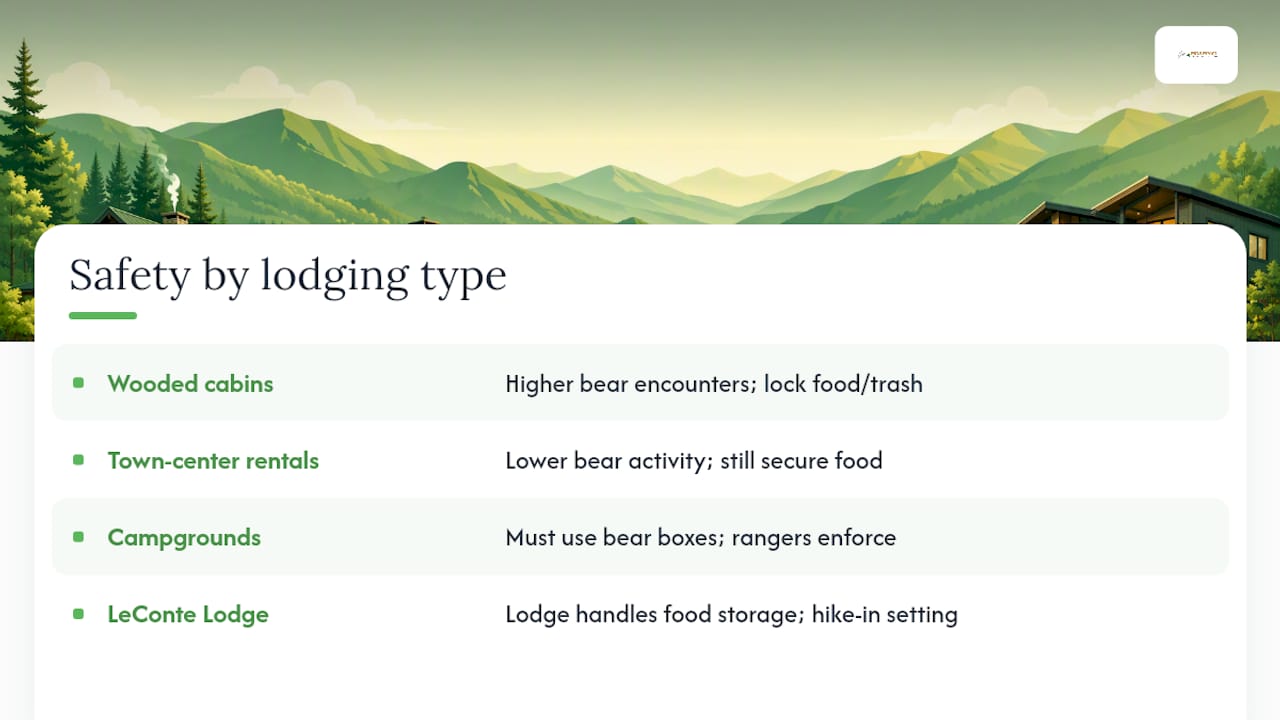
Black bears are a genuine part of life in this region, and where you stay changes how likely you are to encounter one. Cabins tucked into wooded hillsides, especially in Gatlinburg’s outlying areas and parts of Pigeon Forge, see more bear activity than properties closer to town centers.
Store food inside the cabin, never in a cooler on the porch, and keep trash secured until pickup day. Most private rental owners provide bear-proof trash bins or specific disposal instructions, and it’s worth reading those instructions rather than skimming past them.
Campers face a stricter set of rules. Front-country campgrounds require food storage in provided bear boxes, and rangers actively patrol to enforce it. If you’re staying at LeConte Lodge, the lodge itself handles food storage as part of the overnight package, since the hike-in setting puts guests in closer daily contact with wildlife than any road-accessible lodging.
Flash flooding is a smaller but real risk for cabins near creeks or low-lying rentals during heavy spring rain, so check a property’s exact location relative to water before booking during wetter months.
How Do Amenities Compare Across Lodging Types?
| Lodging type | Wi-Fi | Kitchen | Parking |
|---|---|---|---|
| Private cabins/rentals | Usually included, speeds vary by location | Full kitchen in most listings | Private, on-site, sometimes steep driveways |
| Hotels/resorts | Reliable, included | Rarely, occasional mini-fridge | Lots or garages, often a daily fee |
| Campgrounds | None | None, bring your own setup | Designated site parking only |
| LeConte Lodge | None | Meals provided, no cooking facilities | None, hike-in only |
| Glamping/domes | Limited or none | Minimal, sometimes a kitchenette | Small on-site lots |
Cell coverage tends to track with Wi-Fi reliability. Cabins deeper in the hollows often lose signal entirely, while properties closer to Gatlinburg or Pigeon Forge’s main corridors keep a decent connection.
Where to Verify Details and Finish Booking
A few official sources cover everything you need to confirm before locking in your dates.
- The National Park Service lodging page explains in-park policy and confirms LeConte Lodge is the only lodging inside park boundaries.
- Recreation handles reservations for most front-country campgrounds.
- The Wildland Trekking guide to Smoky Mountains lodging offers a useful comparison of gateway towns for hikers weighing trail access against convenience.
A Local’s Honest Take on Where to Stay
Book a private cabin over a chain hotel if you want the trip to feel like more than a stopover. A kitchen, a porch with a view, and an owner who actually answers your questions beat a lobby and a continental breakfast every time. It’s also the rare travel choice where paying less and getting more aren’t in conflict, since direct bookings skip the markup that pads big listing sites, and the money stays with the family who owns the place.
— Joe
Ready to Book a Private Cabin in the Smokies?
You’ve seen the trade-offs: central towns for convenience, quieter valleys for peace, luxury retreats for a splurge, and LeConte Lodge for the truly adventurous. If a private cabin, chalet, or condo fits what you’re after, Smokymountainsbyowners lets you search by town and filter directly for the details that matter: pet policy, hot tub, number of bedrooms, mountain view, without wading through third-party markups.
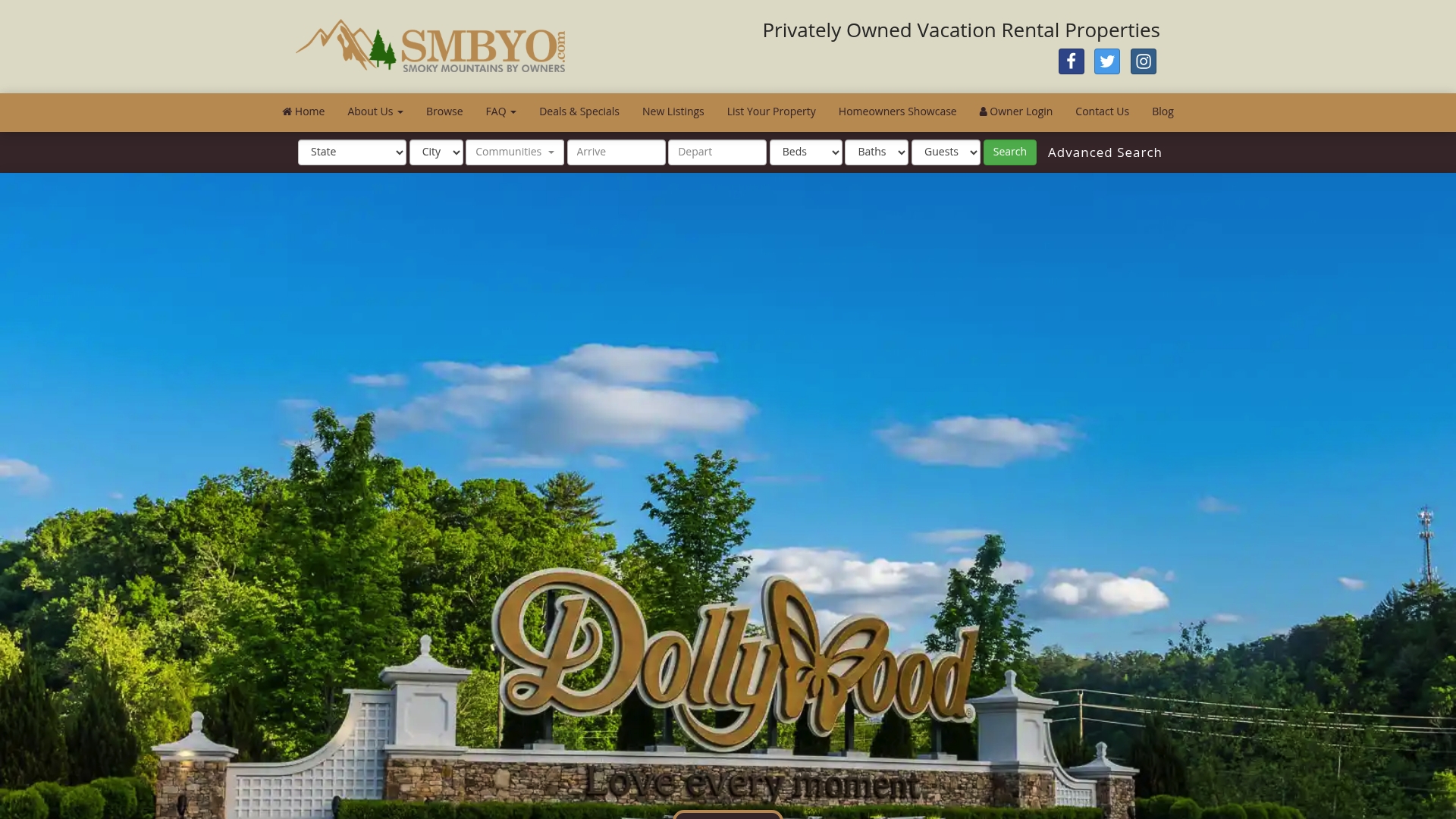
Listings generally allow contact with the owner, so you can ask about the driveway, the cancellation policy, or the exact walk to the nearest trailhead before you commit. Start your search on Smokymountainsbyowners, pick your town, and lock in your dates directly with the person who actually owns the cabin.
Sources
- Lodging - Great Smoky Mountains National Park (U.S. National Park Service)
- LeConte Lodge (National Park Service)
- Recreation
- Where to Stay When Visiting Great Smoky Mountain National Park - Wildland Trekking
Recommended

About the Author
Joe Godar of the Smoky Mountains By Owners (SMBYO) Editorial Team creates destination guides, vacation-planning resources, and local travel content focused on Smoky Mountains vacation rentals.
Our team researches Smoky Mountains communities, vacation rental trends, family travel planning, local attractions, outdoor activities, and direct-booking best practices. Every guide is written to help travelers make more informed booking decisions while avoiding unnecessary third-party guest service fees.
Smoky Mountains By Owners (SMBYO) helps travelers research the Smoky Mountains and connect directly with vacation rental owners and professional property managers.
This article was reviewed for accuracy and updated using local destination research and current vacation rental market insights.