
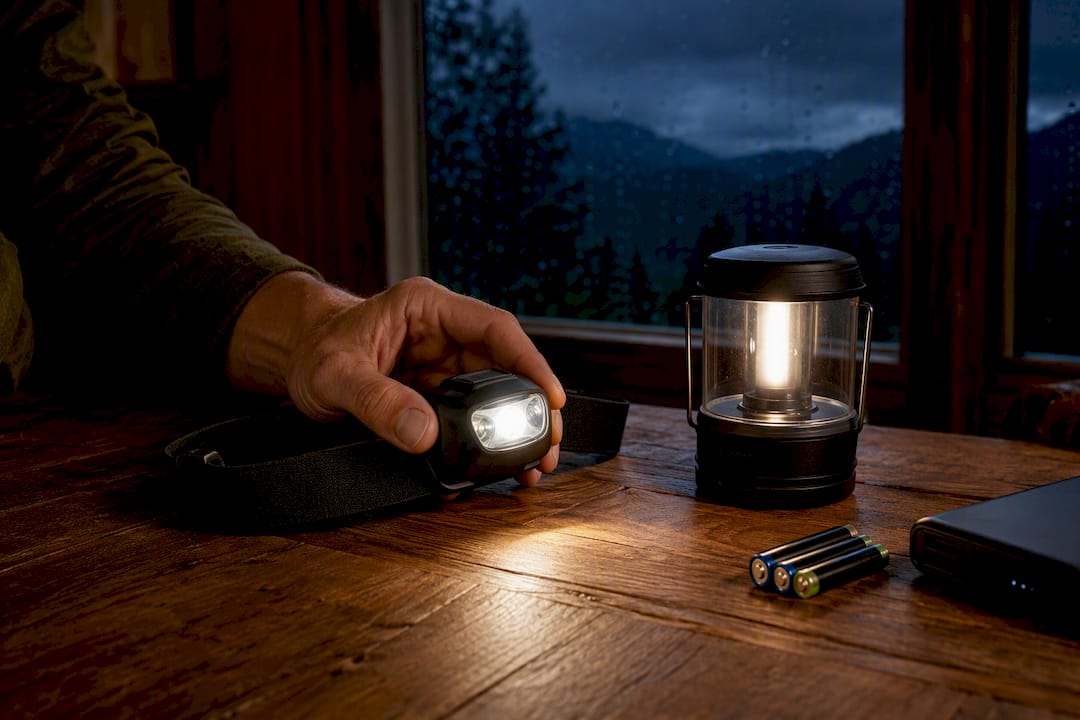
Pack for the season and the activities, not just the trip. Bring layered clothing, sturdy and indoor footwear, a basic kitchen kit, lighting and backup power, a compact first-aid kit, and trash bags for a cabin with no pickup service. Before you fold a single shirt, contact the owner or check the listing to confirm what linens, cookware, and firewood the cabin already provides.
TL;DR:
- Confirm the cabin’s amenities, such as linens, cookware, and firewood, before packing to avoid overpacking or missing essential items during your stay.
- Pack layered clothing suitable for fluctuating mountain weather, including extra socks, waterproof outer shells, and insulated sleepwear, especially in winter and fall.
- Bring all necessary safety, lighting, and power supplies, such as headlamps, a portable charger, and a first-aid kit, to handle power outages and emergencies.
- Focus on activity-specific gear like hiking boots, water shoes, or snow equipment, and pack only what aligns with planned activities to prevent excess luggage.
- Use direct owner communication to verify what’s provided and ask targeted questions, reducing guesswork and enabling smarter, lighter packing.
Table of Contents
- The Complete Cabin Packing List by Category
- Seasonal Packing Adjustments for the Smokies
- Add-Ons for Hiking, Fishing, Boating, and Snow Days
- How to Avoid Overpacking Your Cabin Trip
- Why Booking Direct Makes Packing Easier
- What Most Packing Lists Get Wrong
- Find a Cabin That Matches Your Packing Plan
- Sources
- FAQ
The Complete Cabin Packing List by Category
Most people overpack clothes and underpack the small stuff that actually saves a trip, like a headlamp when the power flickers or a backup phone charger when the nearest outlet is across the cabin. Work through these categories, cross off what the cabin already supplies, and pack the rest with purpose.
Clothing. Use the three-layer clothing system: a moisture-wicking base layer, an insulating mid-layer like fleece, and a waterproof outer shell. Mountain weather in Tennessee and North Carolina can swing 20 degrees between morning fog and afternoon sun, even outside winter. Pack one sleep set per person, and bring more socks than you think you need. Wet feet ruin a hiking day faster than almost anything else, and dryer access at a remote cabin is not guaranteed.
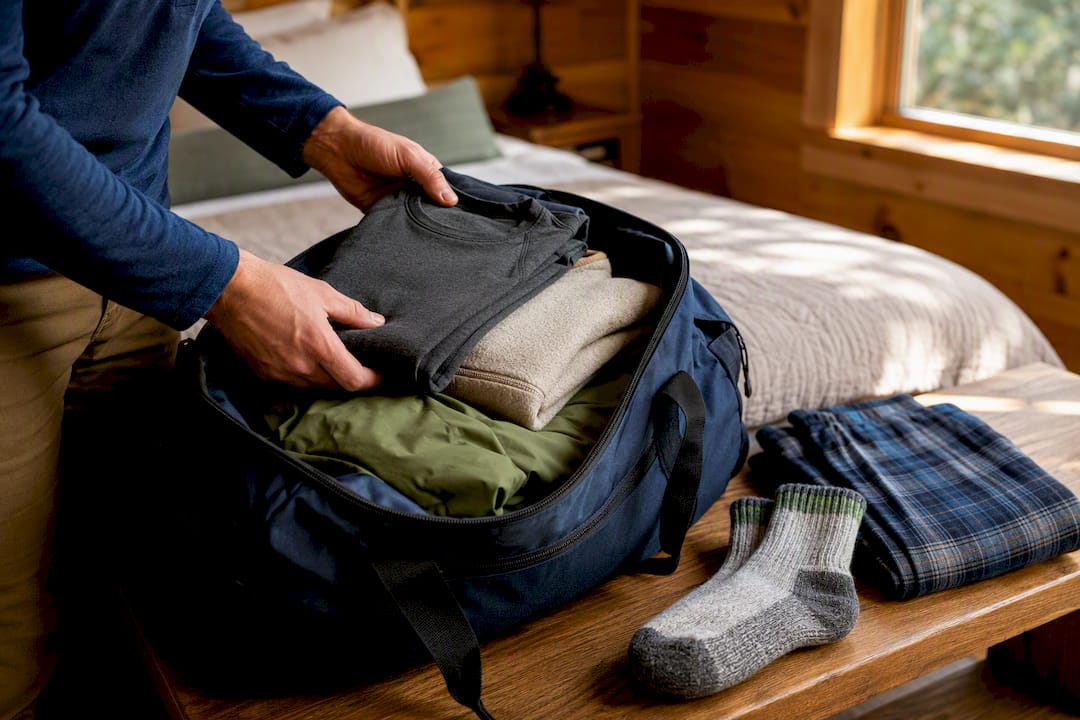
Footwear. One pair of real hiking boots, broken in, not fresh out of the box. One pair of indoor shoes or slippers, since hardwood and tile floors get cold at night. Water shoes if the trip includes creeks, lakes, or a hot tub deck.
Toiletries and personal care. Pack the basics you’d bring anywhere, then add extras that matter more in a remote cabin: hand sanitizer, a spare roll of toilet paper, and any prescription medications in their original bottles. Cabins tucked back on gravel roads are not near a 24-hour pharmacy.
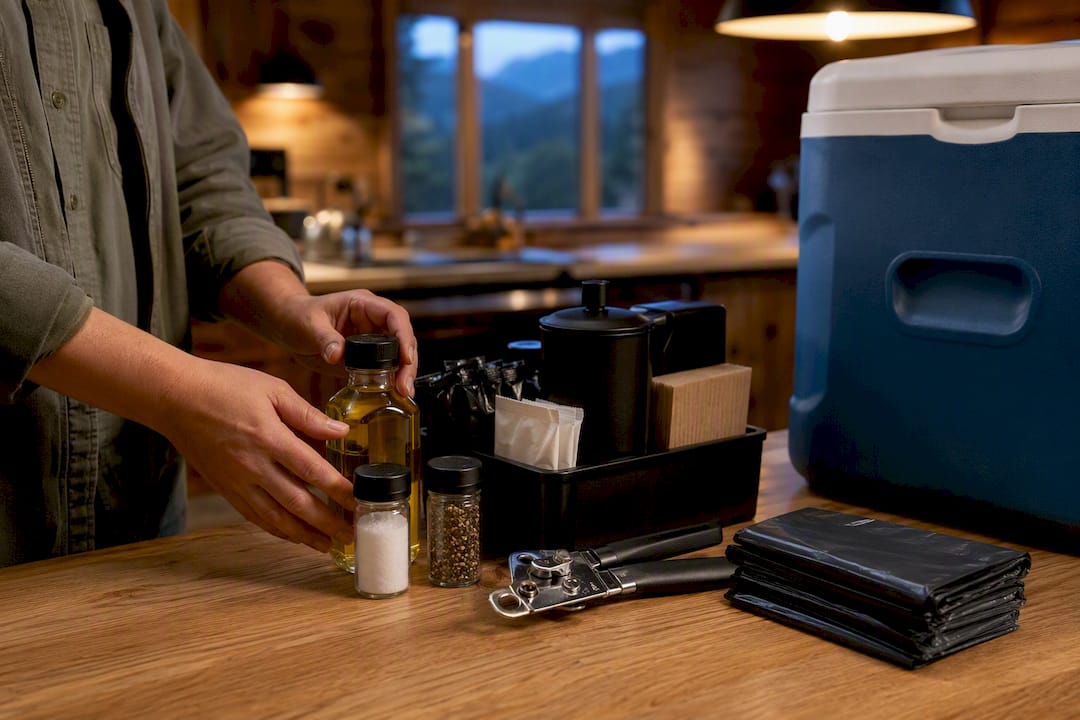
Kitchen and food. Build a rough meal plan before you shop, then bring a small starter kit: cooking oil, salt and pepper, and coffee or tea if the cabin’s kitchen is otherwise bare. A hard-sided cooler protects food better than a soft one on a bumpy mountain drive. Basic utensils, a can opener, and extra trash bags round this out. A curated cabin checklist built from real trips backs this exact combination as the difference between a smooth first night and a frustrating one.
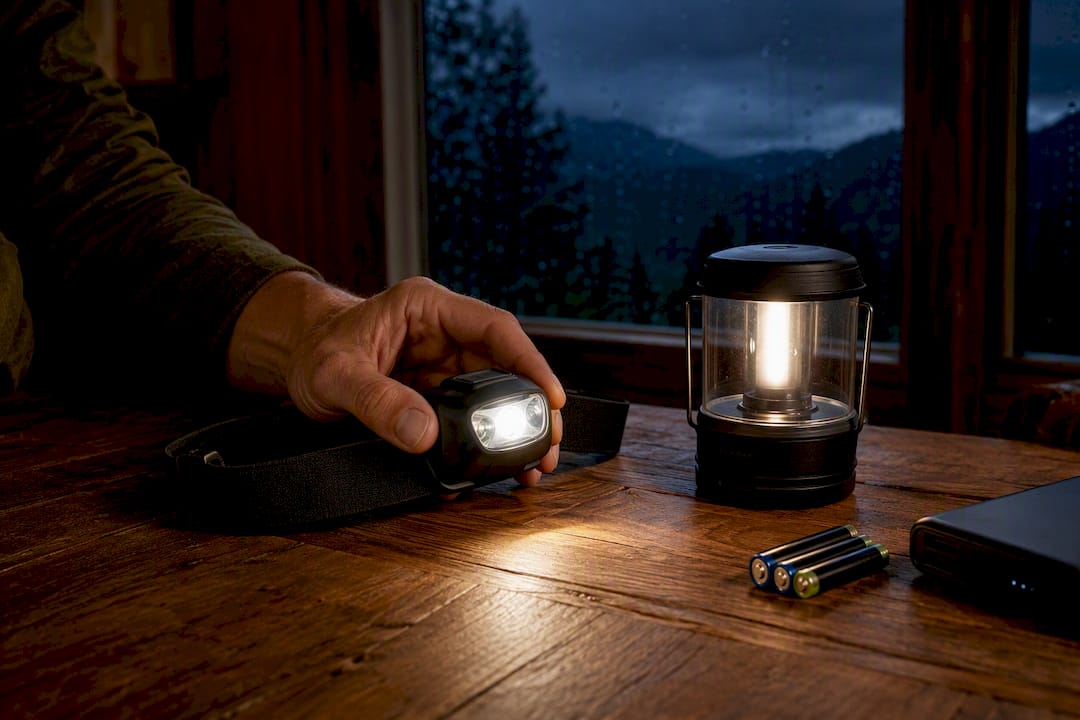
Lighting and power. Bring one headlamp per person and a backup lantern for the main living space. Many cabins sit in valleys or wooded lots where storms knock out power more often than in town. A power bank rated 10,000 mAh or higher keeps phones alive through a blackout, and spare batteries cover the headlamps and lanterns once the built-in charge runs out.
Safety and first aid. A compact first-aid kit with blister care (moleskin or blister pads matter more than people expect after a full hiking day), an emergency whistle, and any prescribed medications in enough supply for the whole stay plus a couple of extra days.
Cleaning and waste. Trash bags, dish soap, paper towels, and a small cleaning kit. Remote cabins rarely have municipal trash pickup, so plan to haul your own trash out when you leave.
Entertainment and comfort. Offline entertainment like downloaded shows, books, or board games, since cell signal and Wi-Fi both get spotty in the mountains. A low-power Bluetooth speaker and an extra blanket or two make cool nights on the porch better.
Packing aids. A dry bag for wet gear, packing cubes to keep the car organized, and a printed copy of your booking confirmation and directions.
Pro Tip: Pack one dry bag even if you’re not doing water activities. Wet boots, a soaked rain jacket, or a spilled water bottle all need somewhere to go that isn’t your clean clothes.
Seasonal Packing Adjustments for the Smokies
The base checklist covers most of the year, but the Smoky Mountains shift character by season, and regional packing guides flag specific gaps that catch first-time visitors off guard.
- Spring: Pollen counts run high through March and April, so pack allergy medication even if you rarely need it at home. Add a lightweight rain shell since spring showers roll through with little warning.
- Summer: Bring stronger insect repellent than you’d use in a city park. Sun protection matters more at elevation, and swimming gear earns its space if the cabin has a pool or sits near a lake or creek.
- Fall: Nights cool off fast once the sun drops behind the ridgeline, often well before dinner. Pack insulated midlayers and a warmer sleep set than the daytime temperature would suggest.
- Winter: Insulated, waterproof boots are non-negotiable on icy mountain roads and trails. Microspikes or traction cleats turn a dangerous walk to the car into a normal one. Pack a heavier outer shell and keep a winter kit in the vehicle, including a blanket, snacks, and a flashlight, in case a mountain road gets slick enough to slow you down.
Add-Ons for Hiking, Fishing, Boating, and Snow Days
Pack for what you’re actually going to do, not for every possible activity. That single mindset shift cuts overpacking more than any checklist trick.
- Hiking: A daypack, a hydration system or refillable bottles, a paper map or downloaded trail map since cell service fades fast on mountain trails, and broken-in trail footwear.
- Fishing and water activities: Basic rod and tackle if you’re bringing your own gear, a reminder to check your fishing license requirements ahead of time, and a dry bag to keep electronics safe near the water.
- Boating or lake days: Life jackets sized for every member of your group, quick-dry towels, and water shoes for rocky shorelines.
- Snowplay or skiing: Goggles, insulated waterproof gloves, chemical hand warmers, and microspikes for icy parking areas and walkways.
- Relaxation-focused stays: Board games, a couple of paperback books, and a speaker or tablet loaded with offline entertainment for evenings on the porch.
How to Avoid Overpacking Your Cabin Trip
Overpacking wastes trunk space and turns unpacking into a chore nobody wants to do on vacation. Confirming amenities with the owner ahead of time and packing by planned activity, rather than “just in case,” cuts the clutter dramatically.
- Confirm amenities first. Message the owner or reread the listing for linens, cookware, and firewood before you pack a single towel or skillet.
- Use the three-bag method. Main luggage for clothing and toiletries, a daypack for hikes or outings, and a separate gear bag for anything bulky like fishing rods or ski equipment. Keeping them separate means you grab one bag for a day trip instead of digging through everything.
- Build a car kit. A blanket, snacks, and a thermos handle unexpected delays on mountain roads better than an empty gas tank and a hungry kid in the back seat.
- Print your directions. GPS and cell service both get unreliable on the final stretch to most mountain cabins, so a printed copy of your booking and driving directions is cheap insurance.
- Run a final 10-minute checklist before you leave the house: chargers, medications, the cooler, and the printed directions. These are the four items people forget most often, and none of them are things you can easily buy once you’re 40 minutes up a mountain road.
Pro Tip: Pack more socks than you think you’ll need, as damp boots can cause discomfort during multi-day hikes. It sounds excessive until day two of hiking in damp boots proves otherwise.
Why Booking Direct Makes Packing Easier
Guesswork is the real enemy of a good cabin packing list, and most of that guesswork comes from not knowing what’s already in the cabin. Booking through a platform that connects you directly with the property owner, rather than a faceless call center, means you can ask specific questions before you ever start packing: Is there a full kitchen or just a microwave? Is firewood provided or do we need to bring our own? Are the beds queen or full?
Send a short list of questions before your stay: potable water source, firewood availability, linen count, and pet policy if you’re traveling with animals. A five-minute message can save you from hauling in a cooler’s worth of unnecessary gear or, worse, arriving to find the crib you assumed was included isn’t there.
Direct owner contact turns a generic checklist into one built for the exact cabin you booked.
What Most Packing Lists Get Wrong
Most packing advice treats every cabin trip the same, as if a summer lake weekend and a January mountain getaway need identical gear. They don’t. The seasonal and activity-based approach outlined here matters more than any generic “50 things to bring” list, because half of those 50 things end up unused in the trunk.
The biggest gap in conventional advice is the assumption that you’re packing blind. You’re not. Every cabin listing and every owner conversation is a chance to eliminate guesswork before you fill a single bag. Guests who skip that step tend to overpack the big stuff, extra linens, a full set of pots and pans, and underpack the small stuff that actually causes problems, like blister care or a second phone charger.
If there’s one thing worth prioritizing above the rest of this list, it’s the amenities check. Everything else on this page is a variation on packing smart once you know what you’re walking into.
— Joe
Find a Cabin That Matches Your Packing Plan
This platform is built for exactly this kind of pre-trip planning. Because listings connect you directly with the property owner, you can search by the amenities that actually shape your packing list, such as a hot tub, fully stocked kitchen, or pet-friendly policy, and then message the owner before you arrive to confirm linens, firewood, and anything else on your checklist.

That direct line to the owner is the real advantage over booking through a faceless portal. You’re not guessing whether the kitchen has a coffee maker or whether the cabin allows your dog. You ask, you get a real answer from the person who owns the property, and you pack accordingly. Browse Smoky Mountain cabin rentals by the amenities that matter for your trip, then send the owner a quick message about what’s already there before you start filling suitcases.
Sources
- Salomon — The three‑layer system explained
- Welcome to the Smokies — The ultimate Smoky Mountains packing list for every season
- Cabin trip packing list: 36 essentials you will actually use

About the Author
Joe Godar of the Smoky Mountains By Owners (SMBYO) Editorial Team creates destination guides, vacation-planning resources, and local travel content focused on Smoky Mountains vacation rentals.
Our team researches Smoky Mountains communities, vacation rental trends, family travel planning, local attractions, outdoor activities, and direct-booking best practices. Every guide is written to help travelers make more informed booking decisions while avoiding unnecessary third-party guest service fees.
Smoky Mountains By Owners (SMBYO) helps travelers research the Smoky Mountains and connect directly with vacation rental owners and professional property managers.
This article was reviewed for accuracy and updated using local destination research and current vacation rental market insights.