
The best time to visit the Smoky Mountains overall falls in two windows: late April through May, and mid October through early November. Both deliver comfortable temperatures, open high-elevation roads, and the park’s signature scenery without winter’s closures or summer’s thickest crowds. Which one wins depends on your priority. Chasing fall color means booking early and accepting weekend traffic; wanting wildflowers and waterfalls with lighter crowds points you to spring. The sections below break down each goal.
TL;DR:
- Visiting in late April or mid October offers the best combination of scenery and manageable crowds, depending on whether wildflowers or fall foliage is your priority.
- Spring wildflowers peak from mid to late April, with waterfalls at their fullest thanks to snowmelt, while fall colors at high elevations peak in early October, moving to valleys late October into early November.
- Summer visits provide full activity options but come with high heat and crowds, requiring early start times and rain gear, especially in July and August.
- Winter offers solitude and scenic snow scenes but restricts access to higher elevations like Clingmans Dome, which closes from December to March.
- Booking lodging should be done well in advance for peak seasons or weekends, with options to choose bases like Gatlinburg for activity access or Townsend for quieter stays.
Table of Contents
- Which Month Is Best for Your Trip Goal?
- When Do Wildflowers and Waterfalls Peak in Spring?
- Is Summer a Good Time for Smoky Mountains Activities?
- When Do Fall Colors Peak in the Smoky Mountains?
- Why Winter Might Be the Smoky Mountains’ Best-Kept Secret
- How Do You Turn Your Chosen Window Into a Trip Plan?
- What I’d Book for Each Type of Traveler
- Lock In Your Cabin Before the Best Dates Disappear
- Where to Check Before You Go
- Sources
- FAQ
Which Month Is Best for Your Trip Goal?
Your ideal window depends less on the calendar and more on what you actually want out of the trip. Here’s how the top options stack up:
- Late September (second half): Heat breaks, elk start their fall rut, and high-elevation color begins before the October rush hits. Crowds: medium. Book 6 to 8 weeks out.
- Mid to late April: Wildflowers carpet the lower trails and waterfalls run full from snowmelt. Crowds: low to medium. Book 4 to 6 weeks out.
- Mid October: Peak color at mid elevations, arguably the park’s most photographed stretch. Crowds: very high. Book 3 or more months ahead.
- August: The best overall balance of weather, daylight, and manageable crowds, according to one seasonal analysis. Crowds: medium high. Book 2 to 4 weeks out.
- January to February: Quiet trails, dramatic snow scenes, minimal traffic. Crowds: low. Book 1 to 2 weeks out, though check road status first.
When Do Wildflowers and Waterfalls Peak in Spring?
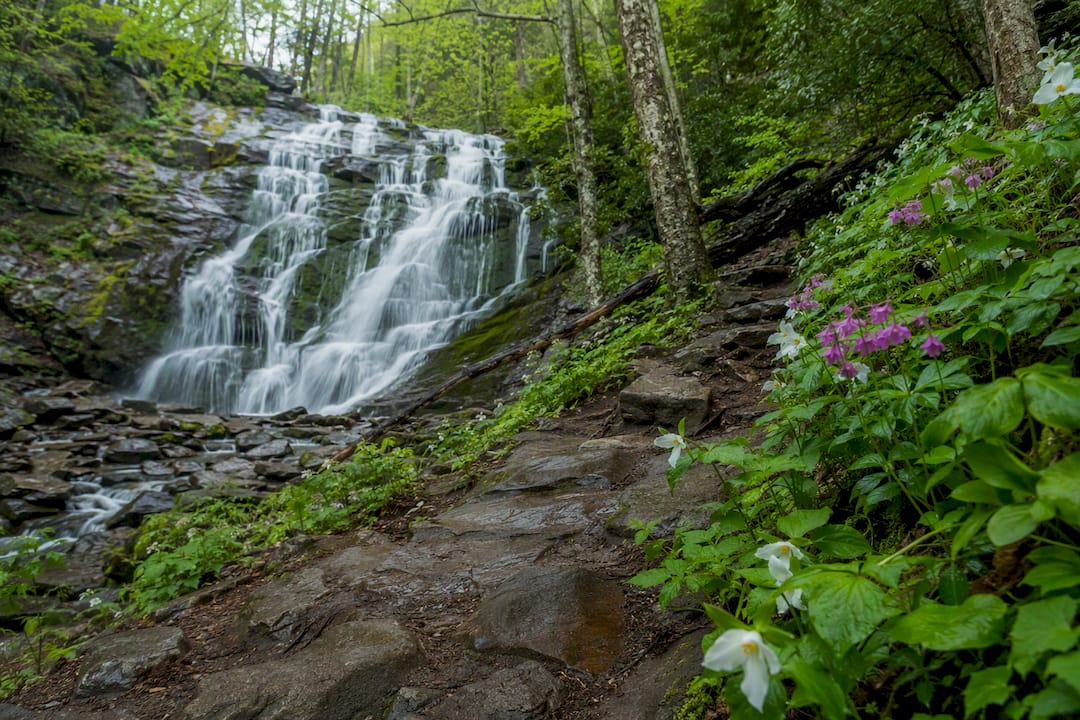
Spring runs unpredictable but rewarding. Lower-elevation wildflowers hit their stride from mid to late April into early May, with trails like the Cove Hardwood Nature Trail and Porters Creek turning into wildflower corridors. Waterfalls run heaviest in March and April thanks to snowmelt and spring rain, so Laurel Falls and Grotto Falls both look their best early in the season.
Expect daytime highs in the 50s and 60s Fahrenheit in March, climbing into the 70s by May, with a real chance of a late cold snap or storm in March and even early April. Clingmans Dome Road typically reopens around April 1, but always confirm current status through the NPS seasonal roads page before planning your trip around it.
Spring break weeks (mid to late March) bring a crowd spike, so travelers chasing lower rates and thinner trail traffic should target early to mid April instead, before schools let out for summer.
- Target mid-to-late April for the wildflower and waterfall combination.
- Avoid the two weeks around Easter and typical spring break dates if you want quiet trails.
- Pack layers. Fifty-degree mornings can turn into 75-degree afternoons.
Pro Tip: Check the Laurel Falls trail page the week of your trip. Spring rockslides and washouts occasionally close sections without much notice.
Is Summer a Good Time for Smoky Mountains Activities?
Summer is when the park runs at full capacity, in every sense. Every visitor center is open, every outfitter is running trips, and Gatlinburg’s zip lines, tubing outfits, and whitewater rafting operations are all fully staffed. If your trip depends on booked activities rather than solitude, June through August is when everything is available.
The tradeoff is heat and crowds. Valley floor temperatures regularly reach the 80s, while summits like Clingmans Dome stay a noticeable 10 to 20 degrees cooler, which is worth remembering if you pack for Gatlinburg weather and freeze at 6,000 feet. Afternoon thunderstorms are close to a daily rhythm in July and August, so plan any exposed high-elevation hike for the morning and carry rain gear regardless of the forecast.
- Start hikes by 8 a.m. to beat both heat and storms.
- US 441 through Newfound Gap backs up badly by midmorning; leave before 9 a.m. or after 3 p.m.
- Bring a rain shell even on clear mornings.
- Reserve rafting and zipline slots at least two weeks ahead in July.
When Do Fall Colors Peak in the Smoky Mountains?
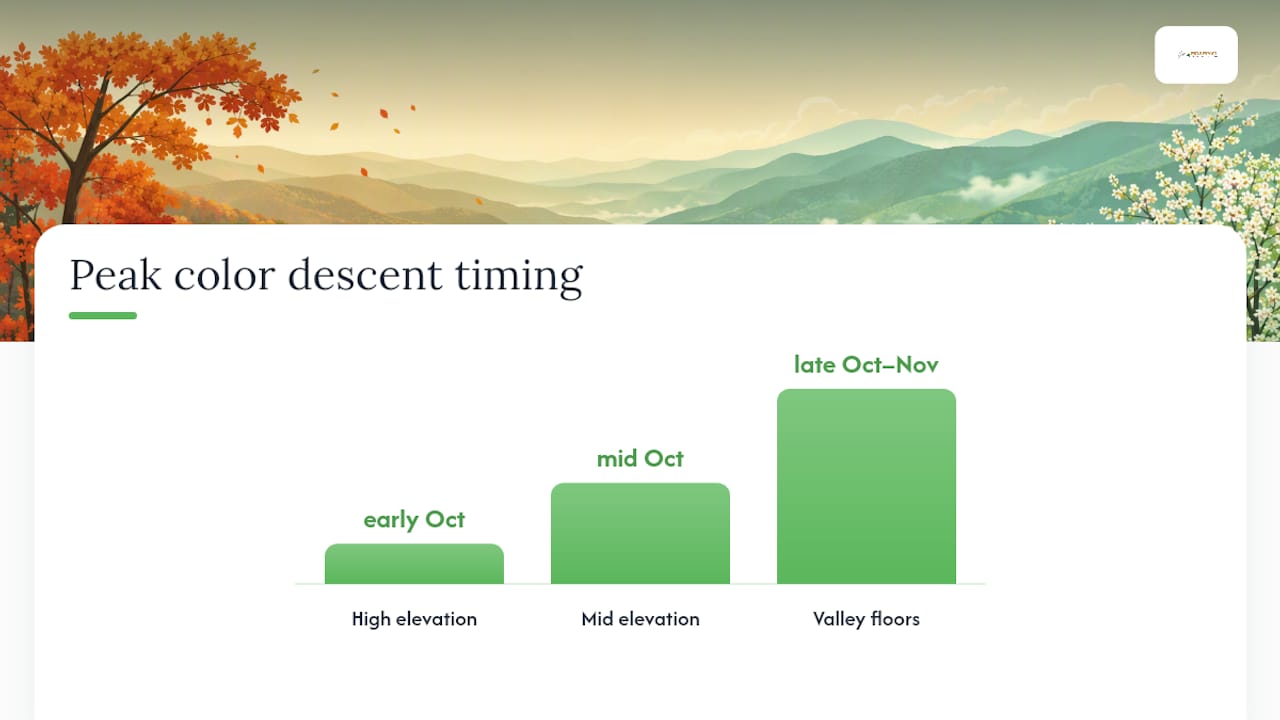
Fall color doesn’t hit the whole park at once. It moves down the mountain over roughly six weeks. Ridgelines above 4,000 feet, including Clingmans Dome and Newfound Gap, typically peak in early October. Mid-elevation forests follow around mid October, the stretch Lonely Planet and most seasonal guides point to as peak color. Valley floors and lower elevations, including Cades Cove, usually don’t turn until late October into early November.
That staggered timing means October’s crowd pressure is heavily front and back loaded around specific color weekends rather than spread evenly across the month. One seasonal analysis notes that visitation concentrates around fall-color weekends rather than building steadily, which is exactly why a mid October Saturday can feel like a theme park while a Tuesday two weeks later feels normal.
Newfound Gap Road, Foothills Parkway, and Cades Cove Loop are the three drives worth prioritizing, but expect full parking lots by 9 a.m. at every major overlook during peak weekends. Weekday visits or a slightly earlier trip in late September thread the needle between good color and manageable traffic.
- High elevation: early October. Mid elevation: mid October. Valleys: late October to early November.
- Weekdays beat weekends by a wide margin during peak color.
- Book cabins and guided tours 3+ months ahead for any October weekend.
- Foothills Parkway offers comparable views with a fraction of Cades Cove’s traffic.
Why Winter Might Be the Smoky Mountains’ Best-Kept Secret
January and February are the quietest months in the park, and that solitude is winter’s biggest selling point. Empty overlooks, snow-dusted ridgelines, and trails you might have entirely to yourself make winter a legitimate choice for photographers and anyone allergic to crowds.
The catch is access. Clingmans Dome Road closes completely from December 1 through March 31, so the park’s highest point is off limits to vehicles all winter. Newfound Gap Road usually stays open but closes temporarily during snow and ice events, sometimes with little warning, so check NPS conditions the morning of your drive.
- Pack for real cold at elevation, even when Gatlinburg feels mild.
- Carry tire chains or choose a vehicle with good winter traction if snow is forecast.
- Skip high-elevation or north-facing trails after storms; ice lingers for days.
- Winter is a poor fit if a Clingmans Dome summit view is the whole point of your trip.
How Do You Turn Your Chosen Window Into a Trip Plan?
Picking a season is the easy part. Locking in the details is where trips succeed or fall apart.
- Book lodging based on your window’s demand level. Peak fall weekends need 3+ months lead time; spring and late September need 4 to 6 weeks; winter weekdays can often be booked 1 to 2 weeks out.
- Get on the road early. Arriving before 9 a.m. beats both the heat and the parking crunch at every popular trailhead and overlook.
- Use Foothills Parkway as your crowd valve. It runs parallel to the busiest corridors and offers similar views with far less traffic.
- Pick your base town deliberately. Gatlinburg puts you closest to restaurants and nightlife; Townsend sits on the quieter “peaceful side” with easier park access; Cherokee and Bryson City on the North Carolina side put you near different trailheads and shorter lines at that entrance.
- Check NPS conditions the week of, and the morning of, your trip. Roads, trails, and even trailhead parking areas can close on short notice, especially in winter and after storms.
Pro Tip: Pack layers no matter the season. A 30-degree temperature swing between the valley floor and a mountain summit is normal, not an exception.
What I’d Book for Each Type of Traveler
Photographers chasing fall color should target the first two weeks of October at high elevation, then chase the wave down to Cades Cove by early November. Families wanting full services without the worst heat or crowds do best in late September or the back half of August. Serious hikers should aim for April, when waterfalls run full and trails haven’t yet filled with summer crowds. Anyone craving solitude over scenery variety should take January seriously. It’s the park’s most underrated month.
For lodging, checking Smokymountainsbyowners early is worth doing regardless of season, since pet-friendly cabins and properties near specific entrances book out fastest for the exact windows described above.
— Joe
Lock In Your Cabin Before the Best Dates Disappear
Some vacation rental platforms connect you directly with property owners across the Smoky Mountains, which can mean better rates and no markup from a middleman booking layer. Once you’ve picked your window, whether that’s a mid-October foliage weekend or a quiet January stretch, the next step is matching a property to your plan.
Search by proximity to the entrance you’ll be using most, filter for pet-friendly cabins if you’re traveling with a dog, and add hot tub or sleeps-8 filters if you’re bringing extended family. Because you’re booking directly with the owner, you can also ask specific questions, like whether the driveway handles snow or how close the cabin sits to Newfound Gap Road, before you commit. For peak fall weekends, treat your booking window the same way you’d treat the trip itself: start looking now. Check availability and browse cabins for your chosen dates before the best properties are gone.
Where to Check Before You Go
Trip plans built around fall color or high-elevation access can fall apart fast if a road closes without warning. A handful of pages are worth bookmarking before you leave home.
- NPS seasonal roads for current Clingmans Dome and Newfound Gap status.
- NPS trail page for Laurel Falls for access notes on one of the park’s most popular hikes.
- NPS park news for recent reopening and closure updates.
- WhenToVisitParks for month-by-month crowd and weather comparisons.
Sources
- Best Time to Visit Great Smoky Mountains National Park: Month-by-Month Crowds & Weather — WhenToVisitParks
- Best Time to Visit Great Smoky Mountains: Crowds by Month — NationalSitesGuide
- Best time to visit Great Smoky Mountains National Park — Lonely Planet
- Great Smoky Mountains National Park — Seasonal roads (NPS)
Recommended

About the Author
Joe Godar of the Smoky Mountains By Owners (SMBYO) Editorial Team creates destination guides, vacation-planning resources, and local travel content focused on Smoky Mountains vacation rentals.
Our team researches Smoky Mountains communities, vacation rental trends, family travel planning, local attractions, outdoor activities, and direct-booking best practices. Every guide is written to help travelers make more informed booking decisions while avoiding unnecessary third-party guest service fees.
Smoky Mountains By Owners (SMBYO) helps travelers research the Smoky Mountains and connect directly with vacation rental owners and professional property managers.
This article was reviewed for accuracy and updated using local destination research and current vacation rental market insights.